

Shortlist: World Cup U20 2025
Get to know tons of players that did good at one of the most prestigious youth competitions

The latest edition of the U20 World Cup ended a few weeks ago: Morocco, who had featured in this tournament for the last time in 2005 (!!), made history claiming a maiden title, beating six-time winners Argentina 2-0 in the final. That was the culmination of years of hard work that has seen the country achieve really interesting results, not only at the youth level, but also at a professional level too (including the women’s game).
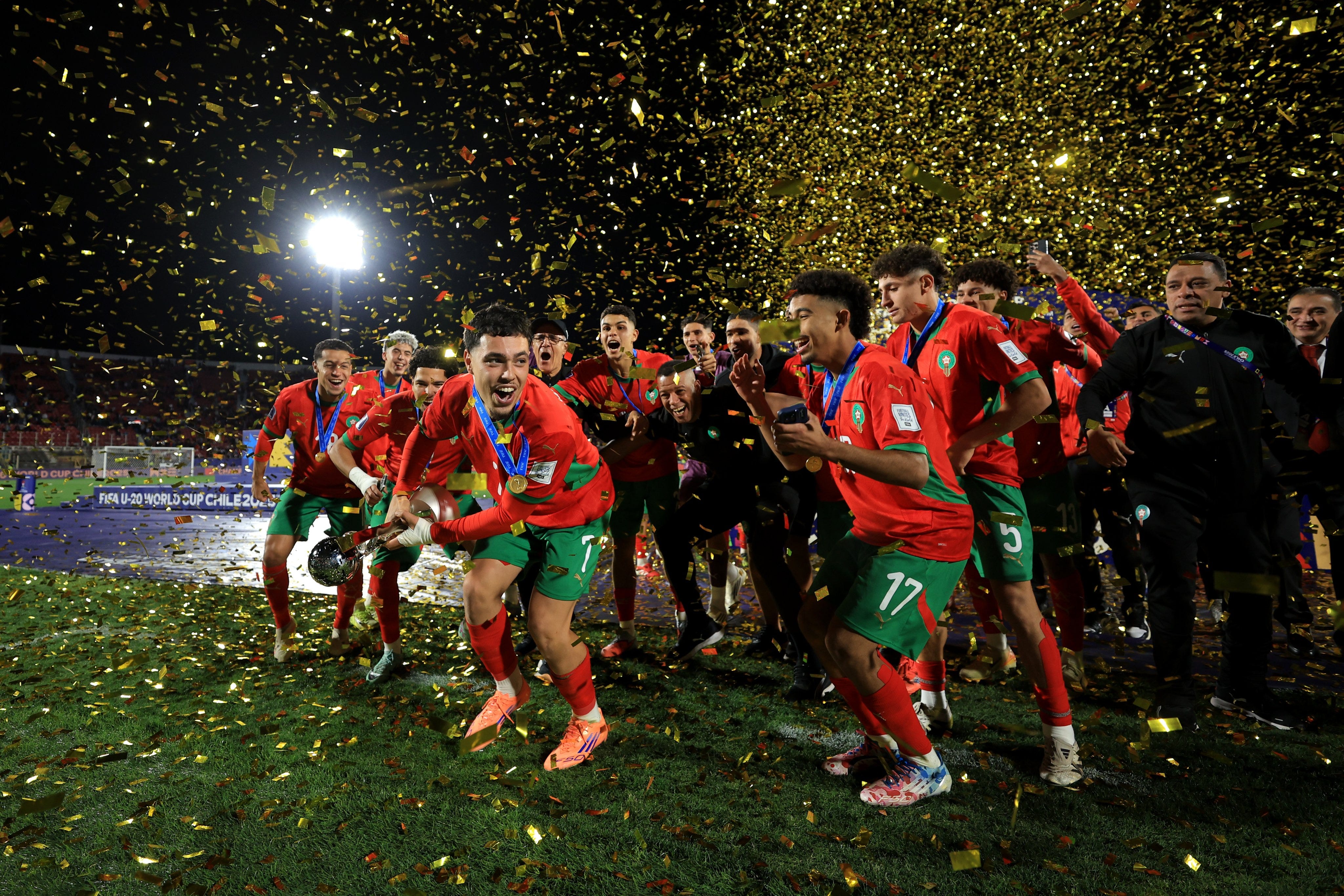
Besides that, France were kinda disappointing (as usual in these last years of youth competitions), Brazil got knocked out in the group stages, United States went on a surprise run that ended in the quarterfinals and much, much more. Below, I’ve listed tons of players that picked my interest, explaining with a few words what exactly made them stand out.
If you’re missing some South American names (such as Milton Delgado, Maher Carrizo or Neyser Villarreal), that’s because I’ve already covered them in my U20 Sudamericano report, earlier this year. Read more below.
Without further ado, let’s dive into it. Enjoy and let me know your thoughts if you manage to get to the end of it!
GK — Alexandre Pisano (2006, Nagoya Grampus)
Pisano is, by all accounts, a modern goalkeeper. Rather than stay inside the six-yard box, he’s constantly going out to clear balls away, collect/punch crosses or rushing ahead to close down an opponent trying to score, with good results overall. He’s got potential as a ball-playing goalkeeper (doesn’t shy away from controlling and passing the ball with his non-dominant foot), but right now his distribution is still a little bit inconsistent.
GK — Henry Gray (2005, Ipswich Town)
Comfortable working with both feet, Gray can punch passes between the lines, mostly angling them out to the right side, using his dominant left foot. He epitomizes the figure of a ball-playing goalkeeper: not only does he frequently position himself side to side with his center-backs and attempt vertical low passes, but he’s also good at drawing pressure and dribbling away from it. Defensively, had a mixed tournament, combining good saves with a blunder against Chile.
GK — Ibrahim Gomis (2005, Olympique Marseille)
At 2 meters tall, Ibrahim Gomis’ impressive wingspan enables him to be a really effective cross claimer: his physical profile is a massive plus in his game. Just like Pisano, he’s proactive when dealing with balls in behind, quickly rushing ahead. Any team can rely on him to work in the build-up phases (good touches, good movement), but his medium/long distribution needs work, though.
GK — Yanis Benchaouch (2006, AS Monaco)
Yanis Benchaouch is a more classic version of a goalkeeper. The AS Monaco player relies on his excellent reaction times to make saves rather than trying to stop shots in the first place. He’s quite good at facing closer shots, going quickly to the ground and parrying it away effectively. Safety is his mantra: upon receiving passes, most of his touches are launching it away.
CB — Asekho Tiwani (2005, Mamelodi Sundows)
A left-footed center-back, Tiwani is someone who takes lots of risks in the build-up stages, taking the ball to his left foot and pinging passes ahead through the center of the pitch — he could sometimes do a better work of weighing the pros and cons of that, finding teammates in better spots. He isn’t particularly explosive or athletic, but compensates that by adopting an aggressive defensive style.
CB — Bruno Alves (2005, Cruzeiro)
Bruno Alves is a top, top ball-playing center-back. Everything you may ask of him with the ball at his feet, he will deliver: diagonal long balls, chance-creation passes in behind, short line-breaking ones… and better yet, he can hit all those using both feet, at any given angle. If you need someone to play the ball out the back, he’s your guy.
CB — Diego Ochoa (2005, Chivas Guadalajara)
Describing Diego Ochoa’s game using only one word would be fairly simple: stability. Playing as a central defender in a back three, he’s tasked with covering space behind both of his teammates and does a good job at it. His first instinct (except when facing long balls, in aerial duels) is always to take a step back and react to most situations faced. When he does go up to press, however, he has shown that he can be a reliable option in physical duels as well. Ochoa isn’t the most progressive passer of defenders and generally plays it safe, but did complete a few line-breaking passes when attempting them. The Mexican defender can also be a threat in offensive aerial duels, being targeted in corners and free-kicks.
CB — Ham Sunwoo (2005, Hwaseong FC)
Ham Sun-woo’s bread and butter are aerial duels. His combination of jumping reach, timing when attacking the ball and eagerness to throw himself over back to goal strikers means that he’s quite effective at dominating opponents in the air and launching the ball back to where it came from.
CB — Ismaël Baouf (2006, SC Cambuur)
Morocco’s captain and pillar of the title winning defense, Baouf is exceptional at reading the game, something that enables him to take good spots before clearing a cross, intercepting passes or even blocking shots. He’s quite good at making defensive actions using his non-dominant left-foot (a major green flag for me, personally) and scans the pitch frequently to assess his next action.
CB — Kazunari Kita (2005, Real Sociedad)
An aggressive defender, Kita frequently jumps into midfield to disrupt attacks, be it in long balls that requires an aerial duel or forcing contact into the back of an incoming striker and taking space away from them. His box defending assets are great, as is his physicality.
CB — Mohammed Ali Barnawi (2005, Al-Ittihad)
Barnawi is more of a covering defender: he isn’t exactly explosive or quick enough to be an elite recovery defender, but is able to deal with runners in behind by starting short runs ahead of them and going to the ground when attempting tackles. He’s reliable with the ball at his feet, even if he isn’t a standout in that department, again. He does have his limitations, but works well enough to make them seem like less of a problem than it should be.
CB — Noham Kamara (2007, Paris Saint-Germain)
One of the youngest center-backs at this year’s U20 World Cup, Kamara is a technically gifted player that can hit switches of play at ease, as well as line-breaking passes. Most impressive of all, his weight of passes are quite good and they don’t require lots of adjustments for the receiver. His timing when engaging in aerial duels seems a little inconsistent, but that could be expected by someone younger and lighter than his peers. He’s also shown a tendency to covering actions rather than duelling ones.
CB — Rion Ichihara (2005, RB Omiya)
Ichihara is not only one of the most impressive CBs of the tournament, but one of the best players on display, overall. He’s exceptional at reading the game to react accordingly, be it covering, blocking or anything else. Upon taking the ball away from their opponent, the Japanese defender quickly starts an offensive sequence using his ball-playing skills. He’s right footed and mostly uses his dominant foot, but can hit good passes (specially long diagonal balls) with both feet.
Furthermore, his mighty impressive jumping reach and willingness to use his arms to throw opponents off balance means he’s an outstanding player in the air. He can also be seen constantly barking orders and giving words of encouragement to his teammates. He won’t stay in Japan for long, that’s for sure.
CB — Simón García (2005, Atlético Nacional)
Speed is Simón García’s superpower. The Colombian got a decent burst of speed and accelerates quickly when needed, going toe to toe with strikers running in behind. His recovery runs are great, just like his covering ones — that makes him a perfect partner for a more aggressive defender or a high-line team. He’s more conservative with his passes and solid in the air.
CB/DM — Tomás Pérez (2005, FC Porto)
Playing across the backline, Pérez has shown great ball-playing skills, mainly by shaping up his body one way and hitting line-breaking passes to the other (a small detail that helps him create time and space by luring opponents away from his desired target). He’s good at side-covering and sometimes takes space up ahead in possession. Also played as a defensive midfielder, keeping the same core of characteristics previously displayed.
CB — Tylon Smith (2005, QPR)
Smith is a quick, intelligent defender that reacts well enough to teammates runs, taking space behind them and sweeping the ball if needed. However, he’s not the most comfortable defender when under pressure and mainly uses his dominant foot to clear crosses into the box, two sets of skills that may prevent him from reaching the upper echelons of football.
FB — Ali Maamar (2005, Anderlecht)
Maamar is a great asset to any team in need of a more conservative full-back. He’s really, really good at facing dribblers in one v one scenarios, always approaching them at the tip of his toes (allowing for quicker reactions when changing directions), using arms to disrupt them and throwing one leg across to recover and protect the ball. His scanning actions when covering the back post are decent too. On the ball, the Moroccan acted mainly as an auxiliary center-back to free up the right winger up ahead. Nonetheless, can sprint across the pitch to provide overlaps, if called upon.
FB — Cristian Cama (2007, AS Roma)
A left-footed wing-back, Cristian Cama was probably the best Italian player in this tournament. He’s constantly hitting the byline, running to get the ball ahead of him and pumping crosses into the box. The timing and weight of his deliveries are great, be it in a high or low cross. He can also create chances via through balls. Defensively, relies on his burst of speed to anticipate and collect the ball before driving forward (overlaps and underlaps).
FB — Dylan Gorosito (2006, Boca Juniors)
Gorosito is one of the more balanced full-backs you’ll see at this level. He might not look like a specialist in any specific area, but what sets him apart is what he can do across different areas of the game. If you need someone to progress the ball from deep, he can ping passes between the lines, angling from his favored right side, or dribble through traffic to get the ball up ahead. Want a creator? Gorosito has consistently created chances for his teammates when taking crosses from deeper positions. What about a more defensive full-back? Not to worry, he’s also good at scanning and taking positions around the back-post.
FB — Frankie Westfield (2005, Philadelphia Union)
Frankie is an attacking full-back. He’s got the power and the strength to sprint time after time, making runs to the byline and creating many chances from crosses and cut-backs. His passing ability also enables him to initiate attacks by setting up a runner, just like he did against France, multiple times. The American player is strong at aerial duels too, be it on his own box or in the opposite one.
FB — Gady Beyuku (2005, Modena)
Beyuku’s strong upper body core allows him to absorb contact and throw players around to win duels. Couple that with his running and carrying power and we’ve got a great player for bursting ahead and intercepting passes or making recovery runs during defensive transitions. His technical base is impressive too: the way he opens up his body to hit passes under pressure is good, as well as his non-dominant foot usage.
FB — Gilberto (2005, Palmeiras)
Gilberto might be one of the smaller players on the pitch every time he steps on it, but he makes up for it by being a playmaking, offensive threat. His crosses are seriously good, as well as his final third passes and his overlapping runs. Given the right context, he could easily be one team’s more impactful creator.
FB — James Overy (2007, Manchester United)
The thing that impressed me the most about James Overy was how, at just 17 years old, he just never stops running. Despite being the youngest player at the pitch in both matches he played, Overy still managed to out-run his opponents. He played one game on the right side and another on the left. His core set of skills remained largely the same: taking short diagonal passes to combine and create, running into more central zones (as opposed to making runs to the byline) and getting stuck into defensive duels.
FB — Keita Kosugi (2006, Djurgården)
Kosugi, a Japanese left-back, is quite effective at breaking away from the defensive line to press: the way he sets up his body to disrupt, block or throw opponents off balance before sticking his leg and touching the ball is the key to his success in these scenarios. On the ball, his body shape is again an important factor, opening it up before collecting a pass so he can face up the pitch and hit passes in an easier way. He’s got the physical endurance to work as an outlet on the left wing, overlapping constantly, and to drive forward with the ball at his feet after quick one-two combinations.
FB — Rei Umeki (2005, FC Imabari)
Mobility and good control over his strides are two key points for Rei Umeki to be an effective defender in one v one scenarios. The Japanese full-back is a decent sprinter and can perfectly pick his time to press opponents, taking into account the amount of space he should give them before attempting a tackle. He’s always on high alert to switch between pressing a winger or covering space next to his closer center-back.
DM — Brooklyn Raines (2005, Houston Dynamo)
Heavily involved in the build-up phases, Raines is a reliable passer that can turn under pressure and take touches with both feet, even if he’s shown a small preference for hitting passes with his right foot. Furthermore, he accelerates quickly over short distances to provide cover for the full-back, make a goal-saving tackle or regain possession further up the pitch.
DM — Chung Ma-ho (2005, Chungnam Asan)
A truly dynamic midfielder, physically reliable, that moves around a lot, Chung Ma-oh likes to get involved in the game, taking the ball directly from his defenders to ping passes all over the pitch, with his perfect long ball distribution. He can be seen lining up next to the center-backs or taking outside positions to get the ball, setting the tempo of the game for his team.
Beyond completing passes and taking touches with both feet, he’s also a good set-piece taker.
DM — Daniel Daga (2007, Molde FK)
Despite being small in stature, Daniel Daga’s jumping reach allows him to dominate aerial duels, clearing long balls to the center in a way that’s reminiscent of PSG’s João Neves. The similarities end there, however: Daga actually does understand the game well enough to spot opportunities to accelerate and pass, but his execution leaves something to be desired. Upon recovering the ball in the middle, he looks to immediately find a teammate ahead, quick-starting an attacking move. In more settled offensive sequences, though, he isn’t that involved in build-up and generally plays it safe when pressured from behind.
DM — Naïm Byar (2005, Bologna)
Byar’s final against Argentina was nothing short of a screening masterclass. The Moroccan defensive midfielder is superb at moving around to shield the defense, covering zones at all directions, across the full length of the pitch, and using his body as a way to leverage situations in his favor. Once he takes a spot between the ball and his opponent, you can forget about getting it back. Byar isn’t much of a passer, but his defensive contributions alone are more than enough for a team to bet on him.
DM — Paul Okon-Engstler (2005, Sydney FC)
A robust player, Okon-Engstler can overpower opponents in direct physical duels, as well as break plays by clearing crosses and intercepting passes. He’s a second ball specialist and usually ends games with lots of recoveries.
But that’s not all: he can progress the ball up the pitch via passes or carries and has shown himself to be an impressive ambidextrous player, using his non-dominant right foot frequently, at all actions. He usually carries the ball a few meters before passing it, taking a positive first touch to take it away from incoming pressures. Left me really surprised until I saw that he spent some of his youth years at Club Brugge and Benfica before departing for his home country. Makes sense.
DM — Tebo Gabriel (2006, Mainz 05)
Another highly mobile player is Gabriel Tebo, Egypt’s defensive midfielder. He’s constantly moving around, offering passing lines behind the first line of pressure, signaling for a ball-to-feet pass. He scans frequently, can hit first-time passes really well and is also a good tackler. Not a surprise to see that he is already at a German club.
CM — Agustín Arce (2005, Universidad de Chile)
Arce is a central midfielder that enjoys getting the ball in deeper areas (mostly off the left side) to take his team forward. His technique is pretty clean, he can slice the ball across the pitch, as well as punch line-breaking passes — there’s something really satisfying about watching him complete all kinds of passes. He’s someone that usually takes risks under pressure, so he will probably give up possession a few times, but nothing really out of ordinary. The Chilean can create space to set up a shot himself using little shoulder drops, despite not being the most accurate shooter from range. Defensively, he’s quick in the first few meters (helps tracking players), but you shouldn’t expect him to sustain it for long distances.
CM — Gomolemo Kekana (2006, Mamelodi Sundowns)
Kekana is a real box-to-box midfielder, in the sense that he’s asking for the ball in the defensive third (good at letting the ball roll out to his back-foot, under low/medium pressure) and then hitting the box at the opposite side to crack a shot at goal. He’s active in the middle third, moving, carrying and passing around, but most of his work at the final third comes in the form of shots — Kekana isn’t that involved in creating chances for other players.
CM — Mattia Mannini (2006, AS Roma)
Playing in a double pivot right ahead of a back three, Mannini is a highly agile and mobile midfielder that can shift directions and turn with the ball at his feet before evaluating his next actions. His repertoire of passes include through balls, diagonals to an incoming wing-back and little chips to activate runners next to the attacking box.
CM — Thiago Pitarch (2007, Real Madrid)
The Real Madrid Castilla player that seems to be on the verge of making a professional debut (having featured on the beach multiple times) can take spots not only in deeper areas, but also in more advanced ones. He’s absolutely comfortable under high pressure, combining dribbling (some of it rolling the ball to his non-dominant left-foot), smart receptions and good positioning to evade it. His passing game looks solid, with good variety too (including outside-of-the-foot ones). Most of his actions are completed using his right foot, but he has shown that he can use the other one as well.
CM — Yuto Ozeki (2005, Kawasaki Frontale)
Yuto Ozeki is another really interesting, dynamic midfielder. In the same offensive sequence, he can see how he transitions from the edge of his own box to the attacking area and back. He’s got the technical fundamentals (taking the ball into both feet, into back-foot, passing sideways and forward) and the physical ones (burst of speed to intercept and pressure defenders, agility to turn under pressure and maneuver in tight spaces) to be an impactful player for a top team in the future.
AM/W — Gilberto Mora (2008, Tijuana)
An attacking midfielder/inverted winger, Gilberto Mora is special. Watching him feels like every touch he makes comes with a little drop of the shoulder and a short dribble to leave opponents behind in some embarrassing ways, all that while having fantastic control of the ball, even under high pressure. He’s always moving, roaming from side to side to get involved in the game and operating at any given angle to progress with short passes and one-two combinations.
AM — Niko Tsakiris (2005, San Jose Earthquakes)
A creative attacking midfielder, Niko Tsakiris is a direct player that tries a lot of through balls over the course of a game, beyond combining before running into the half-spaces (left and right) to hit a cut-back/cross with his left foot. All of that is aided by his ability to evade pressure on the turn.
AM — Rayane Belaid (2005, Atletico Madrid)
Rayane Belaid is an exceptional player when it comes to controlling the ball and creating marginal advantages in different scenarios. Notice below how he’s sometimes letting the ball go onto his back foot, opening up his body at the same time to turn while taking control of it. Not only is he able to evade pressure by doing that, he also speeds up the process of initiating offensive sequences. His confidence in that little move is unmatched and, after doing that, he can carry the ball forward over long distances, approaching the box before delivering a well-thought pass.
The Spanish midfielder, better yet, is also great at hitting the box without the ball, with a good mix of well timed runs (diagonal runs, late runs, double-movement runs) to get to the end of crosses. He could’ve easily finished the tournament with more than one goal.
W — Amar Al-Yuhaybi (2006, Al-Ahli)
Amar Al-Yuhaybi’s close control is superb. His first touch, even when collecting long balls, frequently stops the ball dead in its face and he uses it to dribble and wriggle, trying to create space inside for a shot with his right foot. However, he’s not yet able to ride challenges as well due to his lack of physicality, which means that defenders can force him outside, to less dangerous positions. If he’s somehow able to fix that, he could be a decent player.
W — Gessime Yassine (2005, USL Dunkerque)
An undisputed starter for the champions, Yassine is a versatile left-footed winger that always looks to get into central zones, no matter which side he’s playing from. His footwork is insanely quick, the short dribbles to his dominant foot are a torn for the opposing defenders to handle and he is a prolific creator from both flanks.
It might not seem like it, seeing that he isn’t particularly tall or buffed, but he handles physical contact and even thrives off it, taking the ball away from opponents in shoulder to shoulder duels before driving forward and creating chances. He’s a hard worker off the ball, closing down lanes and following full-backs next to his own box.
W — Hennadiy Synchuk (2006, CF Montréal)
The Ukranian winger from CF Montréal is more of an explosive, touchline winger. His long legs enable him to get a decent burst of speed over the first meters that allows him to create separation from the defender, finding space at ease. Diagonal passes from outside to inside are a mainstay of his game and one of the ways he creates chances for others. Synchuk is also adept at hitting the box via carries in the final third, maneuvering through tight spaces. He’s a diligent player defensively, tracking back and working off the ball.
W/ST — Julian Lægreid (2007, SK Brann)
At 18 years old, Lægreid is already a physically strong player. His dribbling style isn’t the most technically gifted one and he can look a little bit clumsy at times, but he manages to carry the ball into the box from the left side of the pitch effectively, absorbing contact and pushing the ball forward with heavy touches. Besides being a left-sided winger, the Norwegian has also been deployed as a striker, but couldn’t make the most of it — all of his positive impact came off the left, facing forward.
W — Niklas Fuglestad (2006, Moss FK)
The long-legged, slender build winger from Norway is someone who is able to make up ground quickly, even throwing some double-movements to bait defenders before hitting the space behind them. He’s constantly making runs into the box when the ball is at the opposite side of the pitch, finding spots to finish and score. Remains to be seen whether he deals with physical contact well enough when escalating to professional football, but the way he moves is enough to be a threat.
W — Othmane Maamma (2005, Watford)
Crowned ‘Best Player’ of the tournament, Maamma is an extremely direct winger: every time he gets the ball, he goes forward. He’s explosive, strong and can sprint over and over again: that’s a scary combination for any defender having to face him. He does offer some variety when collecting the ball near the touchline (going inside or outside), but his best work clearly comes into action when Maamma hits the byline and delivers crosses into the box. He tore Spain, Brazil, Argentina and many others apart just like that.
W/AM — Ramez Al-Attar (2006, Al-Ahli)
Al-Attar is a dribbly winger. He can not only shift his body around easily, but manipulate the ball with both feet too, making him a threat in tight spaces. His main area of work revolves around the right-half space, combining with both his near full-back and midfielders. Unfortunately, didn’t get the most minutes at this bleak Saudi Arabia team, but what he showed should be enough to ring bells across some European teams.
W — Stipe Ukich (2007, NK Istra)
A right-footed winger, Ukich’s main strengths are his ball control and the way he’s able to create space using long strides. He’s effective off both flanks, adding a decree of unpredictability to his game by hitting any direction off dribbles. His physical build allows him to be really effective in the way that he presses and forces turnovers in offense, reacting quickly and accelerating to dispossess defenders.
W — Zavier Gozo (2007, Real Salt Lake City)
Explosive and fast, Gozo is a true touchline winger that thrives in one vs one situations. Instances where he gets the ball in more central zones are definitely rarer, except for when he’s making a back-post run. Using stepovers and quick bursts of speed, he’s effective when hitting the byline with the ball at his feet and has shown no problem taking low crosses with his non-dominant left-foot.
ST — Alejo Sarco (2006, Bayer Leverkusen)
Sarco is obviously nowhere near his level, but he’s got shades of Kun Aguero to his game. Small in stature, the most effective way he’s found to get into scoring positions is by making short runs into space after starting it at a defender’s blind spot. He’s not gonna stretch the pitch with long runs time after time as someone like Haaland would, instead picking his moments to be aggressive. Sometimes he does drop back to get the ball back to goal, but struggles to control and keep possession with pressure from behind.
ST — Jamal Iddrissou (2007, Internazionale)
Jamal Iddrissou is a double-threat striker. He can generate threat by running in behind (even if sometimes he ends up badly squared in relation to goal), attacking the near post, or getting the ball at his feet, back to goal. He does a good job of shielding the ball away from pressure and, when he drops deeper, is excellent at facing the goal and activating runners into space. Furthermore, he does not shy away from working in defensive transitions and is eager to help his team defensively (that even led to a red card earlier in the tournament, due to two yellow cards for tactical fouls).
ST — Yassir Zabiri (2005, Famalicão)
If you’re playing a high line, you wouldn’t want to face Yassir Zabiri. The Moroccan striker is superb at running in behind, offering a good variety of movements in and around the box. He can delay his runs, curving it to stay onside until it’s time to break out, can bait defenders with double-movements, can hit blind-spots and even takes positive touches to send the ball across defenders, making it harder to tackle him. Pair that up with his top speed and quality of finishes and you got an outstanding striker, someone ready to explode into the scene. His maturity and that repertoire of runs sets him apart from other young strikers and, honestly, it’s hard to imagine him not succeeding in professional football if you pair him up with the right profiles.
Uff, that’s it. If you went through all that, you’re a hero and hopefully I’ve been able to shine some light on new players for you. Not all of them are going straight to the top, but they all are more than capable of building a career in professional football — fingers crossed they make it.
If you enjoyed that, please drop a like, subscribe and/or share it.
Anything you wanna say, don’t hesitate in asking below. As always, appreciate any kind of support!